mércores, 3 de outubro de 2012

proposta de traballo "key translation tools"


Internet: although not designed as a translation aid, the Internet provides unparalleled opportunities for document and terminology searches.

Translation memories: systems that automatically search for text segments that have been translated before and stored in the memory. These translated segments are then inserted in the new translation and the translator can decide whether to keep, amend or discard them. This is particularly useful for repetitive or highly standardised documents.

Terminology banks: IATE (InterActive Terminology for Europe) is one example of an online terminology database. It contains around 9 million entries and was built up by the terminologists working in all the European institutions. Since 2007 it has been freely available on the Internet.

Machine translation: provides 'raw' translations of documents for certain language pairs, based on a system of bilingual dictionaries and linguistic analysis. It can help to save time, but requires great care; the output usually has to be corrected ('post-edited') and should always be carefully checked.

Dictionaries are still used by translators as language and terminology aids. Increasingly, the printed versions are being replaced by CD-ROMs or online dictionaries.

extract and picture from Translation and interpreting: Languages in action (2009) European Commission; page 15

proposta de traballo "work areas for translators and interpreters"

Translators and interpreters can work in the public sector (as national, European or international civil servants), in the private sector (as employees of commercial companies, translation agencies, etc.) and in community groups and voluntary organisations.

Translators and interpreters either work in-house as salaried employees or are self-employed as freelances. It is also possible to work as both a translator and an interpreter.

There are many types of translation: 'general', financial, legal, technical (medical, scientific, computers, etc.), literary, marketing material, news reports.

Translation does not always mean writing out the full text. Translators are often asked to produce written summaries of long documents or to give a quick verbal translation, so that the client can identify which passages in a lengthy document need translating word for word, or just get the general gist of the text.

Web translation is increasingly important in today's multimedia society. Texts for the web must be short, easy to read and drafted in a web-friendly style. Web translation often involves editing the original text.

Not to mention ... film subtitles, adverts, patents, software and computer games, cartoon strips.

The translator's job often involves other skills too, such as revision and editing, project management, prospecting for business and the ability to manage a company.

Conference interpreters are trained for three main types of work:

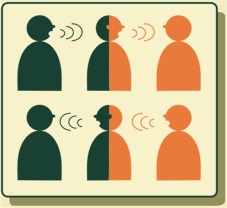
Consecutive interpreting: the interpreter sits with the delegates, listens to the speech and renders it at the end, in a different language, generally with the aid of notes. Although nowadays consecutive interpreting has been largely replaced by simultaneous, it is still useful for certain kinds of meetings (working lunches, field trips, etc.).

Simultaneous interpreting: the interpreter works in a sound-proofed booth with at least one colleague. The speaker in the meeting room talks into a microphone, and the interpreter listens in through a headset and repeats the message into a microphone almost simultaneously. The delegates in the meeting room select the channel offering the language of their choice.

Whispering: this is a form of simultaneous interpreting in which the interpreter sits (or stands) between the delegates and interprets directly into the listener's ear, in most cases without using any form of interpreting equipment.

Conference interpreters have to work in all kinds of situations: committees and conferences, discussions between heads of state, prime ministers, etc., business meetings and trade
negotiations.

Interpreters are often called into courts, hospitals, police stations, immigration offices, etc. This is known as 'public service interpreting'. In many countries it requires special qualifications because of the highly sensitive nature of the work. The Interpretation DG is currently looking at training needs for legal interpreters.

Sign-language interpreting: at conferences and meetings, interpreting between spoken languages and sign languages, used by the hearing-impaired community all over the world, is usually provided in simultaneous mode.

Not to mention ... TV and radio interviews, internet chats, videoconferences.

NOTE: ‘conference interpreter’ is a job title indicating a high level of skill. Conference interpreters don’t just work at conferences – they’re trained to work in all kinds of situations.

extract and picture from Translation and interpreting: Languages in action (2009) European Commission, pp. 10-11
proposta de traballo "difference between translation and interpreting"


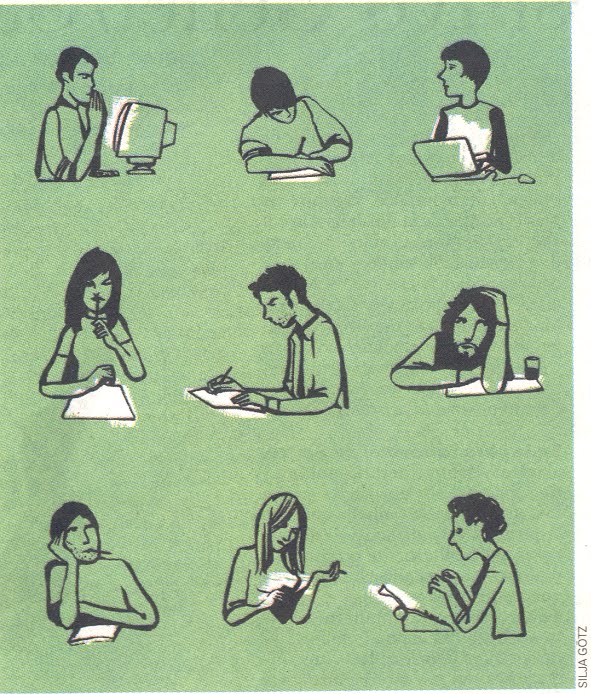
Translators have to write texts that accurately convey the message and content of the original document and are grammatical and readable in the target language.

A good translation should read like a document in its own right. In many cases, for example legislation, the translation is 'authentic', which means it has the same legal force as the original version.

Faithful translations and interpretation reflect both the intention of the author or speaker and the style and register of the language used.

Interpreters provide spoken versions that convey, in another language, the message and intentions of the original speaker.

Unlike translators, interpreters are seen by their customers. They make face-to-face communication possible. Interpreters speak in the first person and become the voice of the speaker. They express the speaker's ideas and convictions with the same intensity and same shades of meaning, and without ever adding their own views or comments.

Both interpreters and translators must understand all the shades of meaning of the source language, so that they can reproduce it as faithfully and naturally as possible in the target language. This also requires excellent drafting skills and the ability to think on your feet!

Skills needed by professional translator and conference interpreters

The ability to understand is essential for both translation and interpreting. You can't express the content of a speech or text clearly unless you have understood it in the first place. So translators and interpreters must have a thorough knowledge of the source language, a well-developed ability to analyse and some knowledge of the subject-matter.

But understanding is not enough. Interpreters and translators must be able to re-express this information accurately and eloquently so it can be used by their target audience.

They must know how to find the right register for a given situation, for a document (written) or speech (oral).

Translators' skills

Excellent drafting skills, in order to produce texts that don't sound like translations.

Thoroughness and accuracy, so that they remain true to the spirit of the original and all the information it contains. Specialised translation is impossible without terminology and document research and liaison with specialists in the field.

Translators must have an enquiring mind, a desire to learn and a sense of initiative. Translators often have to work under pressure (to short deadlines), so they must be adaptable and able to get their priorities right and organise their work.

Freelances must also have the ability to market and manage their business.

Increasingly, translators must be computer-literate and able to use a range of software applications to optimise their work.

Interpreters' skills

Conference interpreters must be effective communicators, at least as spellbinding as the speakers.

Conference interpreters must keep rigorously up to date with world affairs and the areas in which they work. Increasingly, interpreters must be computer-literate and able to use a wide range of research tools. When the microphone is on, there is no time to look things up in dictionaries and encyclopaedias: the interpreter has to be on the ball.

Interpreters work without a safety net and must possess the gifts of intuition and flexibility, coupled with rapid reactions that enable them to tackle any subject by any speaker without being thrown.

Interpreters must possess diplomatic skills and be sensitive to the context and the situation in which they're speaking if they are to convey the speaker's intention correctly.

extract from  Translation and interpreting: Languages in action European Commission  (2009), pp. 6-7

sábado, 29 de setembro de 2012

asociacións internacionais de tradutor@s


AITC - association internationale des traducteurs de conférence


CEATL - European Council of Literary Translators' Associations


CIUTI - conférence internationale permanente d'instituts universitaires de traducteurs et interprètes


Clearing House - Unesco Clearing House for Literary Translation


EAMT - European Association for Machine Translation


EST - European Society for Translation Studies


EUATC - European Union of Associations of Translation Companies


GALA - Globalization and Localization Association


IATIS - International Association for Translation and Intercultural Studies

tradución e interpretación na Comisión Europea

www.free-press-release.com
EUR - Lex (lexislación comunitaria)

base de datos terminolóxica IATE


EMT (master en tradución a nivel europeo)


EMCI (master en interpretación a nivel europeo)

venres, 28 de setembro de 2012

proposta de traballo "common myths"

representación do proceso de interpretación
www.jess-dresden.de
tirado de Translation and Interpreting: Languages in Action (2009) European Commission, pp. 4-5

common myths …

… on translation:

“To translate, all you need is a good dictionary.” FALSE
Translation is a profession. If a good dictionary were enough, bad translations would not be so common. (Think of all those incomprehensible instruction manuals or amusing hotel notices!)

“Good translators don't need dictionaries or reference documents.  They just translate.” FALSE
Research is an essential part of translations Translators need to analyse and take a critical look at sources of information and terms in glossaries.

“My trilingual secretary can do all my translations.” FALSE
Even if someone can speak or write in a foreign language, they can't necessarily produce a good translation.

“If you have a good knowledge of two languages, you can translate any text from one of them into the other.” FALSE
Although a few people can work into more than one target language, as a rule translators specialise in one direction only. Passive and active command of a language are not the same. Furthermore, a literary translator is not necessarily able to translate a legal contract, while a translator of management textbooks is not the obvious choice for medical literature.

“Translators will soon be replaced by computers.” FALSE
Some machine translations are very good, but computers will never translate as well as humans because the nuances and subtlety of human language are still beyond the grasp of artificial intelligence. But the increasingly powerful computer applications on the market today are a great help to translators.
... on interpretation:

“Translation and interpreting are the same thing.” FALSE
Although translation and interpreting have a lot in common, they are separate professions requiring different skills and different types of training. You can be a good interpreter without being a good translator; and vice versa.

“To be an interpreter, you just need to know languages.” FALSE
Interpreting is a profession. If you want to interpret anything more challenging than routine conversations, you need to learn special techniques that cannot be improvised.

“I know Portuguese and Finnish, so I can interpret into those languages.” FALSE
You can only interpret into a language if you know it perfectly. Ideally it should be your mother tongue. Interpreters must react and process information quickly and put it clearly, eloquently and without too many ums and ahs.

“Any interpreter will do. I don't need a conference interpreter.” FALSE
Conference interpreter is the title used for interpreters who are university graduates and have been trained to a very high level. They don't only interpret at conferences. Not all interpreters have had this training.

domingo, 23 de setembro de 2012

proposta de traballo "hells bells" & "back in black"

nas nosas vidas ás veces soan as badaladas do inferno

HELLS BELLS (1980) - AC/DC, Young, Young & Johnson


I'm a rolling thunder, a pouring rain
I'm coming on like a hurricane
my lightning's flashing across the sky
you're only young but you're gonna die

I won't take no prisoners, won't spare no lives
nobody's putting up a fight
I got my bell, I'm gonna take you to hell
I'm gonna get you, Satan get you

hell's hellsYeah, hell's hells
you got me ringing
hell's bells
my temperature's high,
hell's hells

I'll give you black sensations up and down your spine
if you're into evil you're a friend of mine
see my white light flashing as I split the night
‘cause if God's on the left, then I'm stickin' to the right[

hell's bells, Satan's comin' to you
hell's bells, he's ringing them now
hell's bells, the temperature's high
hell's bells, across the sky
hell's bells, they're takin' you down
hell's bells, they're draggin' you around
hell's bells, gonna split the night
hell's bells, there's no way to fight, yeah

pero sempre debemos voltar inda co luto posto

BACK IN BLACK (1980) - AC/DC, Young, Young & Johnson


back in black
I hit the sack
I've been too long I'm glad to be back
yes I'm, let loose
from the noose
that's kept me hanging about
I keep looking at the sky
‘cause it's gettin' me high
forget the hearse 'cause I'll never die
I got nine lives
cat's eyes
usin' every one of them and running wild
'cause I'm back
yes, I'm back
well, I'm back

yes, I'm back in black
back in the back
of a Cadillac
number one with a bullet, I'm a power pack
yes, I'm in a bang
with a gang
they've got to catch me if they want me to hang
cause I'm back on the track
and I'm getting to flac
nobody's gonna get me on another rap
so look at me now
I'm just makin' my play
don't try to push your luck, just get out of my way
'cause I'm back
yes, I'm back
well, I'm back

outta sight